Most homeowners have no idea what their deck frame is made of. Why would they? You can’t see it. It’s under the boards, doing its job quietly. Until it isn’t.
We’ve been building decks in Sydney for years. The number of times we’ve arrived at a job to find perfectly decent boards sitting on a frame that’s half-eaten or waterlogged, it’s more than we care to count. The boards get replaced and everyone moves on. Then five years later, same problem. Because nobody fixed the actual problem.
The frame is the deck. Everything else is just the surface.
Why Timber Frames Keep Letting People Down
Treated pine does okay when it’s fresh. H3, H4: it’s got chemical protection, it’ll handle some moisture, it’s resistant to insects early on. But Sydney is not kind to timber. The humidity alone is enough to start working on it. Add a pool nearby, or a garden bed that holds moisture up against the posts, and the clock runs faster than most people expect.
Termites don’t help. We’ve seen frames that looked completely fine from the outside (solid-looking posts, no visible damage) and when you push on them, they just give. The inside is gone. That’s not a freak occurrence. It happens regularly, across all kinds of suburbs, not just the leafy ones people assume.
And timber moves. Seasonally, constantly. It dries out, it absorbs moisture, it twists along the way. A frame that was level when we built it won’t stay that way forever. Low spots develop where water pools. Fasteners work loose. It’s a slow process, but it’s always moving in one direction.
So What’s Light Gauge Steel?
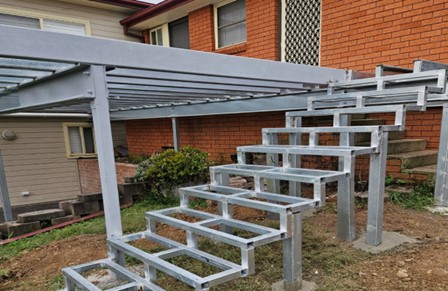
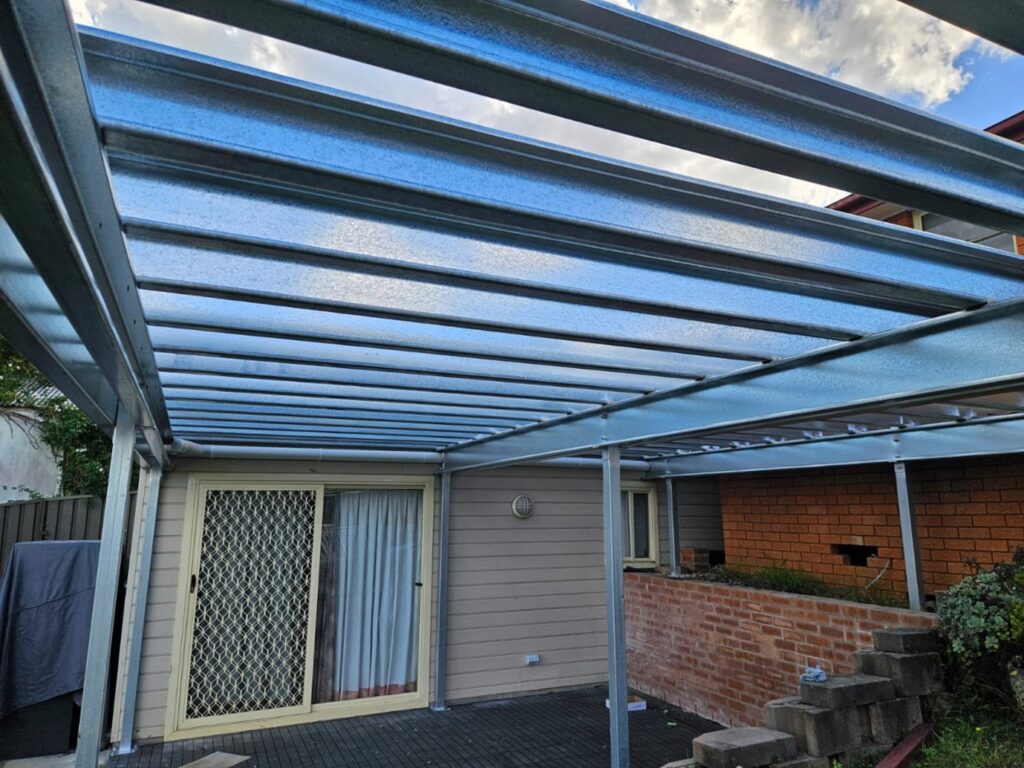
Cold-formed steel sections. Galvanised, shaped at room temperature into structural profiles: C-sections, Z-sections, tracks. Same stuff commercial builders have used for decades, just applied to residential deck framing.
Before the steel arrives on site, it’s already cut to length, pre-drilled where it needs to be. No measuring wet timber, no compensating for a bowed joist, no shimming posts because the material shifted. It goes together the way it was designed to go together. What we build on Monday looks the same on Friday, and it’ll look the same in ten years.
It’s governed by AS/NZS 4600:2018 here in Australia. That’s the design standard for cold-formed steel structures if anyone asks.
The Parts of Sydney Where This Really Matters
We do a lot of work in the Northern Beaches, Hills District, Hornsby, Ku-ring-gai. These areas are hard on timber. The coastal air accelerates corrosion in fasteners and hardware, the humidity is persistent, and in the bushland suburbs there’s another layer on top of all that.
From BAL-29 upward (and plenty of properties in those areas sit at BAL-29 or higher), the National Construction Code requires non-combustible framing. Steel qualifies. Treated pine doesn’t, full stop. If your block sits in a bushfire zone and you want a compliant deck, you’re getting a steel frame whether you planned to or not. We’d rather people know that upfront than find out at the approval stage.
The other thing steel gives you in those areas is span. It goes further than timber for the same depth section. Fewer intermediate posts. On a sloping block or over a retaining wall, that’s not just structural, it’s the difference between a deck that looks right and one that’s cluttered with supports.
What You Actually Get Out of It
No annual pest inspections for the frame. No re-treating. No jacking up a section that’s dropped because a joist gave out. The frame is galvanised and coated, and once it’s in, it’s done. We have clients who switched from timber years ago and genuinely don’t think about the structure anymore. That’s the outcome.
Composite boards, hardwood, fibre cement, aluminium: all of it fixes into steel cleanly. And because the frame is actually flat and square, the boards go down properly. Gaps stay consistent. Fasteners sit right. The finished deck looks the way it was designed to look, and stays that way.
If you’re thinking about a new build or replacing a frame that’s giving you trouble, have a look at our light gauge steel deck framing systems in Sydney and get in touch.



