A ten year old, premium 60 square metre Spotted Gum deck in St Ives still looked fantastic from the top. The homeowner’s actual complaint was simpler and more worrying: the boards had started feeling soft and bouncy underfoot in a couple of spots.
What ten years had actually done underneath
The original builder had put a treated pine subframe directly over low clearance, damp ground with inadequate cross ventilation. Dense Spotted Gum resists decay well, which is exactly why the boards on top still looked and felt fine. The treated pine joists underneath weren’t so lucky. Trapped moisture and poor airflow had let white rot and fungal decay take hold, and by the time Serg got underneath to look, the joist tops had turned to mush. The stainless deck screws holding everything down had completely lost their bite and were sitting loose in timber that could no longer hold a thread.
It’s the kind of failure that’s genuinely invisible from above. A deck can look and feel structurally sound right up until it doesn’t, because the boards were never the problem.
Why this didn’t become a full teardown
The instinct on a job like this is to quote a full rebuild, new frame, new boards, the lot. That’s also the most expensive answer, and it throws away timber that’s often still genuinely good. Spotted Gum at this age and this quality isn’t cheap to replace.
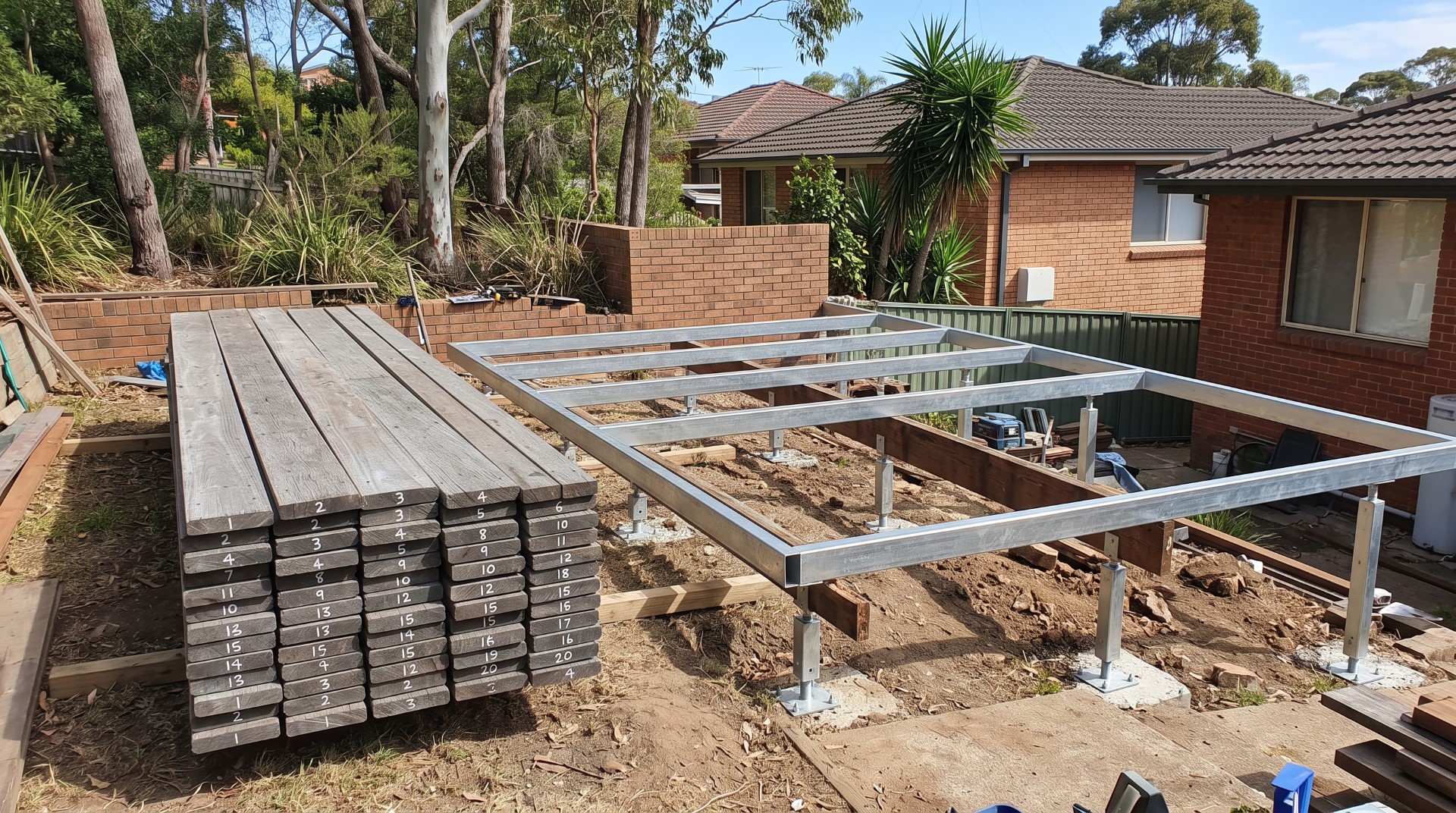
Instead, Serg carefully unscrewed, numbered, and salvaged 85 per cent of the existing boards before touching the frame underneath, treating them as a set of parts to be reinstalled rather than debris to be skipped.
Fixing the actual cause, not just the symptom
Replacing rotten joists with new timber in the same damp, poorly ventilated position would have solved nothing, it just restarts the same clock. Serg demolished the rotten treated pine subframe entirely, excavated 150mm of topsoil underneath to genuinely improve air drainage rather than patch around the original problem, and installed a low profile 100x50mm Boxspan galvanised steel joist frame mounted on adjustable Uni-Piers.
The salvaged Spotted Gum boards went back down over the new steel frame, with fresh insulation tape run between the timber and the steel to stop moisture getting trapped at that contact point, the same kind of small detail that decides whether a fix lasts or just delays the next one.
What it actually saved
Reusing the original boards saved the client over $12,000 in new timber material costs compared with a full replacement, while the underlying rot problem got fixed permanently rather than patched. Steel doesn’t decay, doesn’t warp, and termites can’t eat it, so whatever put the original treated pine frame at risk in that damp, low clearance spot simply isn’t a risk to the new one.
If your deck feels off underfoot
Soft or bouncy spots on a deck that still looks fine on top are almost always a frame problem, not a board problem, and the frame is exactly what’s hardest to check yourself. It’s the same lesson that applies whether the threat is salt air eating through fixings near the coast or damp ground rotting a joist inland, the frame decides how long the deck actually lasts, regardless of how good the boards on top are. If something feels wrong underfoot, get it looked at before it gets worse. Get in touch and we’ll tell you honestly whether it’s a repair or a full rebuild.



