Freshwater sits close enough to the ocean spray zone that the air itself is part of the engineering brief. Less than 300 metres from the water, salt doesn’t just sit on the surface of things, it gets into every unwashed corner underneath a deck and goes to work on whatever metal it finds. Standard galvanised steel wasn’t built for that fight, and on plenty of decks along this stretch of coast, it’s losing.
What salt air actually does to a standard steel frame
Ordinary galvanised channel or light gauge purlins, the kind specified for a typical Sydney backyard, are usually coated to Z275, which is a fine standard for most suburbs. In a C4 or C5 marine environment within a few hundred metres of the ocean, that same coating gets eaten through in three to five years. Airborne salt deposits settle in the parts of the frame that never get rained on or hosed off, the undersides, the joins, the fixing points, and white rust and pitting corrosion start there first, invisibly, long before anyone notices a problem from above.
By the time it shows up as movement in the boards, the structural connections have usually been quietly failing for a year or more.
Building for the actual environment, not the average one
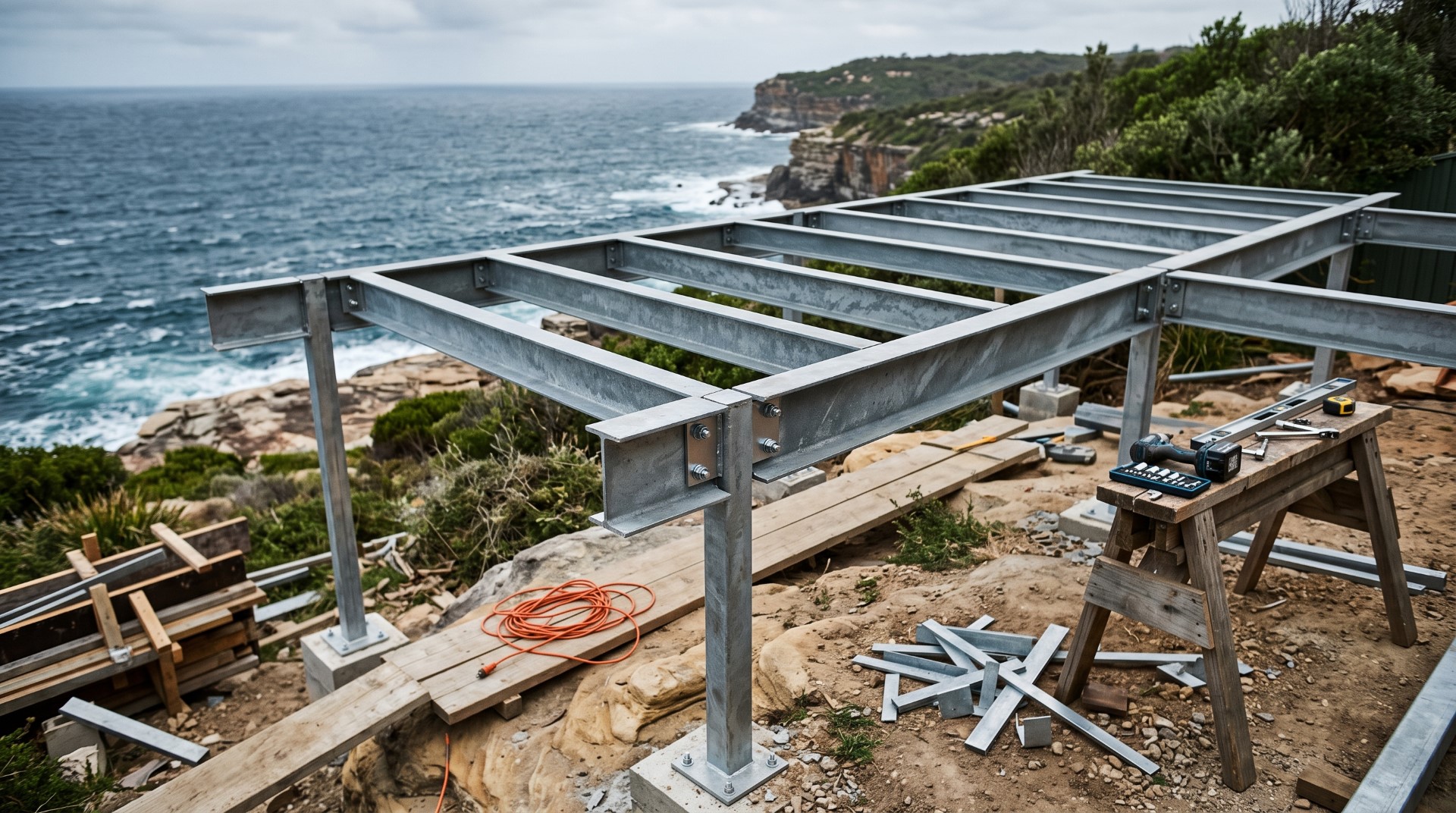
On a recent Freshwater job, Serg specified Z450 heavy zinc coating Boxspan steel, roughly 450 grams per square metre of zinc protection against the 275 grams standard commercial-grade steel carries. It’s a heavier, slower-to-consume coating built for exactly this exposure, not a generic frame with a marine sticker on the box.
The fixings mattered just as much as the steel. Standard zinc plated or Class 3 Tek screws were ruled out entirely. Every structural connection instead used 316 marine grade stainless steel bolts and isolators, the same grade used on boat fittings and coastal handrails, because a fixing point is exactly where salt corrosion starts first.
There’s a detail most specs miss even when they get the steel and the fixings right: stainless steel sitting directly against zinc coated steel causes its own corrosion problem, a galvanic reaction between the two dissimilar metals that accelerates when the joint gets wet, which on this site is constantly. Serg fitted neoprene isolation washers and nylon sleeves between every stainless bracket and the galvanised frame, keeping the two metals from ever touching directly. Skip that step and you can spec the best steel and the best fixings on the market and still watch the joint corrode from the inside.
What the standard spec looks like four years on
Next door to this job sits a deck built four years earlier with standard C-channel steel framing and generic self drilling Tek screws, the sort of spec that’s perfectly fine a few suburbs inland. The salt air had already eaten straight through the unsealed screw holes, rusting out the joist-to-bearer connections. The deck was sagging 40mm along the ocean-facing edge, a genuine structural problem, not a cosmetic one, on a frame that still had over a decade of expected life left anywhere but here.
That’s the real argument for spending more on the frame in a coastal zone. It’s not that standard galvanised steel is a bad product, it’s that a few hundred metres of salt exposure changes what “standard” needs to mean. Built to the C4/C5 spec, the same structure that would fail in four years is engineered for a 50 year structural lifespan without salt degradation.
If you’re building close to the water
The same logic that makes steel the right long term choice for a Sydney deck still applies by the ocean, it just needs a different coating weight, different fixings, and a galvanic isolation detail most standard specs skip entirely. If your block sits within a few hundred metres of the water, get the actual exposure assessed before anyone quotes you a generic steel frame. Get in touch and we’ll spec it for where you actually live, not the suburb average.



