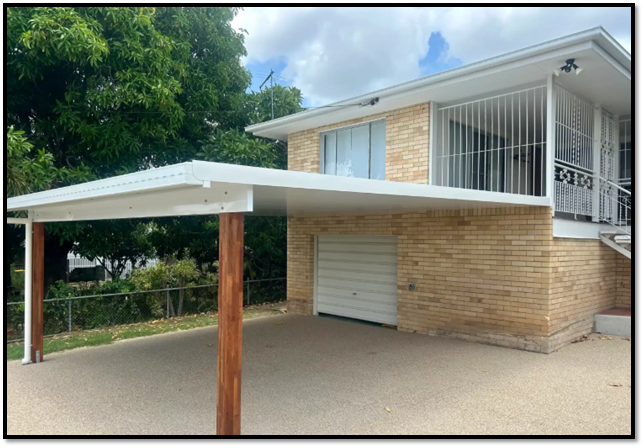
If you live anywhere near bushland in Sydney (and a surprising number of us do), there’s a good chance your property sits on bushfire prone land. The Hornsby Shire alone has nearly 20,000 homes within 100 metres of bushland, and areas like Ku-ring-gai, Sutherland, the Hills District, and the Northern Beaches aren’t far behind.
So, when it comes to building or replacing a deck, the question isn’t just “what looks good?” It’s “what’s going to comply with my BAL rating and still give me an outdoor space I actually want to use?”
This guide walks you through what bushfire resistant decking actually involves, what materials work at each BAL level, and how to make the right choice for your property.
What Is a BAL Rating, and Why Does It Matter for Your Deck?
BAL stands for Bushfire Attack Level. It’s a classification system defined under Australian Standard AS 3959 that measures how exposed your property is to ember attack, radiant heat, and direct flame contact during a bushfire. Your BAL rating is determined by factors like how close you are to bushland, the type of vegetation surrounding your property, and the slope of the land.
There are six BAL levels:
BAL-LOW: Minimal risk. No special construction requirements.
BAL-12.5: Ember attack risk. Some construction requirements begin to apply.
BAL-19: Increased ember attack and moderate radiant heat exposure.
BAL-29: High risk. Decking must use non-combustible or bushfire resistant timber. Subfloor supports need to be fire-resistant were unenclosed.
BAL-40: Very high risk. Decking must be non-combustible and cannot be spaced. Supports must be non-combustible (steel or concrete) or fully enclosed.
BAL-FZ (Flame Zone): The highest risk. Direct flame exposure is expected. All decking materials must be non-combustible with no gaps, and structural supports need a Fire Resistance Level (FRL) of at least 30/30/30.
Your local council can tell you your BAL rating, or you can check the NSW Rural Fire Service’s Bushfire Prone Land Tool online. If you’re building a new deck or replacing an old one in a bushfire prone area, your deck must comply with the relevant BAL requirements. It’s not optional
Decking Materials by BAL Rating: What You Can (and Can’t) Use
Here’s where things get practical. Not every material works at every BAL level, and understanding the options will save you time, money, and the headache of a non-compliant build.
BAL-LOW to BAL-19: Most Materials Are on the Table
At these lower risk levels, you’ve got the most freedom. Standard hardwood timbers, composite decking, and treated pine can all be used, though there are some conditions around proximity to glazed elements (windows and doors).
If your deck sits within 300mm horizontally of a window that’s less than 400mm above deck level, even at BAL-12.5, you’ll need to use a bushfire resistant timber species.
At these levels, it still makes sense to think ahead. Choosing fire-resistant materials now means less worry later if BAL ratings are reassessed (which does happen as vegetation and conditions change).
BAL-29: Where the Rules Tighten
BAL-29 is the level where material selection really starts to narrow. Decking boards, supports, framework, and stair treads all need to be either non-combustible or made from a bushfire resistant timber species.
The Australian hardwoods that qualify at BAL-29 include species with a density of 750 kg/m³ or greater at 12% moisture content. In practical terms, the species you’ll most commonly find in Sydney that meet this threshold are:
Blackbutt: One of the most popular choices. It’s durable, looks good, and handles Sydney’s climate well.
Spotted Gum: A striking hardwood with natural variation in colour. Strong and dense enough for BAL-29.
Ironbark: Extremely hard and dense. Practically bulletproof, but tougher to work with.
Tallowwood: Naturally oily, which gives it good weather resistance alongside its fire credentials.
Composite decking options also exist for BAL-29. Products like the Eko deck Flame Fighter range have been tested and certified to AS 1530.8.1, which is the standard that determines a BAL rating for non-standard building materials. If you’re considering a composite product, always check that it’s been tested by a NATA-accredited authority. Not all composites on the market carry a legitimate BAL certification.
At BAL-29, subfloor spaces also need attention. If the subfloor is unenclosed, supports must be non-combustible or bushfire resistant timber. Enclosing the subfloor with mesh (2mm aperture maximum) or bushfire resistant materials is another compliant option.
BAL-40: Non-Combustible or Nothing
At BAL-40, standard timber decking is off the table entirely. Decking boards must be non-combustible, and they can’t be spaced, meaning no gaps where embers could lodge and ignite debris.
Your main options here are:
ModWood Flame Shield. This is a composite decking board specifically formulated with fire-retardant additives. It’s tested and certified to AS 1530.8.1 for BAL-40, making it the highest-rated timber-based decking product available in Australia. It comes in a 137 x 23mm profile, has an R11 slip rating, and doesn’t require painting, staining, or sealing. It can be installed with either an enclosed or unenclosed substructure, which gives builders some flexibility.
Fibre cement decking (Hardie Deck). James Hardie’s fibre cement decking system is deemed non-combustible and rated all the way up to BAL-FZ. It’s resistant to moisture, termites, and rot, and uses a concealed fixing system. It’s a solid performer in terms of fire compliance, though it’s worth knowing that fibre cement can be more prone to surface wear and impact damage than some alternatives.
Steel-framed substructure. At BAL-40, your deck frame needs to be non-combustible. Steel framing, particularly cold-formed galvanised steel systems like Box span, is the go-to solution. It won’t rot, won’t attract termites, and it meets BAL requirements at every level including Flame Zone. We use steel framing extensively in our bushfire resistant decking solutions in Sydney because it provides a foundation that’s genuinely built to last.
BAL-FZ (Flame Zone): Maximum Protection Required
Flame Zone is the most restrictive BAL classification. Your property faces potential direct flame contact, and every element of the deck (boards, frame, fixings, balustrades) must be non-combustible.
At this level, your realistic options are:
Hardie Deck (fibre cement) on a steel subframe
Tiled systems on a non-combustible substrate, such as porcelain or stone tiles on a steel-framed deck with fibre cement sheeting (like Scyon Secura) as the base
Aluminium decking: Fully non-combustible and available in timber-look finishes, though it can get hot underfoot in direct sun and sounds different when you walk on it
Steel or concrete decking systems: The ultimate in non-combustibility, though they require careful design to feel like an outdoor living space rather than an industrial platform
Gaps greater than 3mm in any decking must be protected by corrosion-resistant steel mesh with apertures smaller than 2mm. All structural supports need an FRL of at least 30/30/30, which effectively means steel or concrete.
What About the Subframe? Why Steel Matters in Bushfire Zones
It’s easy to focus on the deck boards. They’re what you see and walk on, after all. But the subframe is just as critical, especially in higher BAL zones.
A timber subframe in a BAL-40 or BAL-FZ area won’t pass inspection. Full stop. And even at BAL-29, if your subfloor is unenclosed, you need non-combustible or bushfire resistant supports.
Steel framing solves this problem cleanly. Cold-formed galvanised steel joists and bearers are non-combustible, termite-proof, moisture-resistant, and dimensionally stable. They won’t twist, warp, or sag the way timber can over time. They’re also lighter than you’d expect, which makes them practical even on sloped or elevated sites.
For properties in Sydney’s bushfire prone areas, a steel subframe paired with the right deck boards gives you a combination that’s both compliant and genuinely long-lasting.
Sydney Suburbs Where BAL Ratings Are Common
You might be surprised by how much of Greater Sydney falls within bushfire prone land. Some of the areas where BAL ratings most commonly affect decking projects include:
Hornsby Shire: More than half the shire is covered by bushland
Ku-ring-gai: Heavily vegetated with fingers of bushland running deep into residential streets
Northern Beaches: Particularly around Ingleside, Terrey Hills, and Duffy’s Forest
The Hills District: Significant pockets of bushfire prone land, especially near the rural fringe
Sutherland Shire: Including areas near the Royal National Park
Blue Mountains: Consistently among the highest-risk areas in Greater Sydney
Hawkesbury: Large tracts of bushfire prone land across the district
Penrith and Campbelltown: Western Sydney suburbs bordering bushland reserves
Even some inner suburban areas along waterways and parks can carry BAL ratings. If you’re unsure, your council’s planning department or the NSW RFS Bushfire Prone Land Tool can clarify your property’s status.
Practical Tips for Building a Bushfire Resistant Deck
Beyond choosing the right materials, there are several practical steps that strengthen your deck’s resistance to bushfire:
Mind the gaps. Board spacing of 2–4mm is generally recommended. Gaps of 5–10mm have been shown to be particularly vulnerable to ember lodgement. At BAL-40 and above, boards can’t be spaced at all.
Enclose or protect the subfloor. An open subfloor space allows members to accumulate underneath the deck, which is a significant ignition risk. Enclosing it with steel mesh (maximum 2mm apertures) or non-combustible sheeting dramatically reduces this risk.
Think about what’s around the deck. Flammable landscaping (bark mulch, woodchips, dense shrubs) right next to your deck is asking for trouble. Swap them for gravel, decorite stones, or fire-resistant plant species. Keep at least a small buffer of non-combustible ground cover around the deck perimeter.
Seal timber with a non-combustible sealant. If you’re using hardwood at BAL-29, a quality fire-retardant sealant adds another layer of protection and helps maintain the timber.
Don’t forget the accessories. Balustrades, privacy screens, and pergola structures attached to your deck also need to meet your BAL rating. Powder-coated aluminium, stainless steel, and frameless glass are all compliant options that look good and handle the conditions.
Choosing the Right Builder
Not every deck builder has experience working in bushfire zones. The requirements under AS 3959 are specific, and a builder who isn’t familiar with them can easily install materials or details that won’t pass a council inspection.
When choosing a builder for a bushfire zone deck, look for:
• Demonstrated experience with BAL-rated projects
• Knowledge of AS 3959 and the ability to specify compliant materials
• Experience with steel subframe construction
• Willingness to handle the council approval and certification process
• A portfolio that includes work in bushfire prone areas
It’s also worth asking about their relationship with suppliers of BAL-rated products. A good builder will know exactly which products are certified and which ones just claim to be.
The Bottom Line
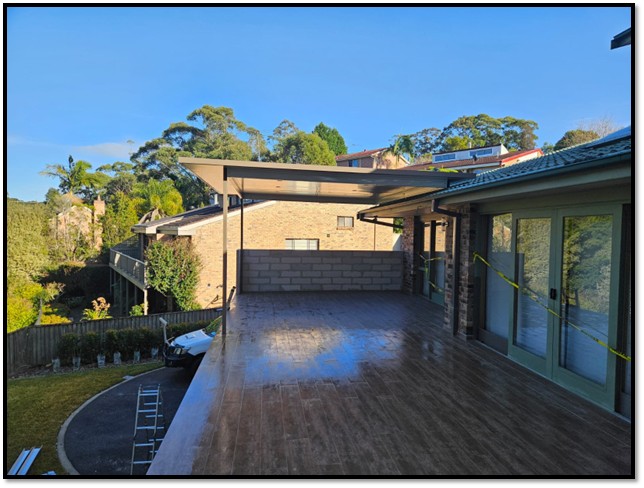
Living in a bushfire prone area doesn’t mean giving up on a beautiful outdoor space. It means being smarter about what goes into building it. The right combination of materials (fire-rated boards on a steel subframe, with proper detailing and compliant accessories) gives you a deck that’s safe, built to code, and genuinely enjoyable to use.
If you’re in Sydney and your property carries a BAL rating, getting the material selection and construction details right from the start will save you from costly rework and compliance issues down the track. It’s one of those situations were doing it properly the first time isn’t just the safest option, it’s the most cost-effective one too.



