Sydney’s deck environment isn’t kind
Spend any time around decking jobs in Sydney and you learn quickly that a good-looking deck is only half the battle. It doesn’t take long for humid summer air and salt spray off the harbor to work their way into softwood. One wet season and you’re wondering why your treated pine joists are curling. Termites? They’re not a theoretical risk – most of us know someone who has had to jack up a back deck because white ants chewed through a bearer. The stat that keeps getting thrown around at trade mornings is that one in five Aussie homes cops a termite attack at some point, and they don’t stop at a single joist.
Bushfire rules add another layer. Under AS 3959 and the National Construction Code, if your place sits in a BAL 29 or higher zone you can’t use combustible framing for stairs, joists or posts. Lower ratings give you a bit more freedom, but once you head into higher BAL territory the choices shrink fast. A Sydney deck has to stand up to moisture, fight off insects and, in the worst case, not become a tinder box – all while still looking like something you’d want to invite friends around to enjoy.
Why steel keeps turning up on site
It stays straight when timber moves
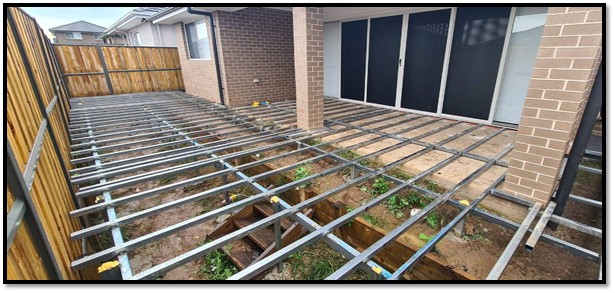
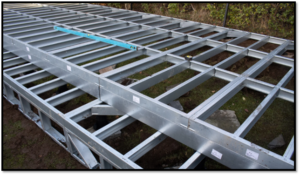
There’s nothing new about steel in construction. Commercial builders have used cold pressed, U shaped sections for decades because they hold their shape. When you translate that to decks it means frames that don’t sag or twist when the weather turns. I’ve gone back to jobs five or ten years later to tweak a board or swap out some pavers and the steel frame looks the same as the day we bolted it down. Treated pine and hardwood swell and shrink with the weather, especially on exposed headlands. Steel doesn’t budge, so you don’t need as many posts or footings to keep things level. For clients who want a floating platform over a pool or a balcony deck out the back of a split level home, fewer posts make a big difference to how open the space feels
Termites can’t eat it, and fire won’t ignite it
Ask a builder in the Northern Beaches or the Blue Mountains about white ants and you’ll hear some colorful stories. A timber sub frame is basically a buffet for termites. Swap it out for steel and they’ll still take a nibble on any soft decking board you lay, but they can’t make a meal of the structure. When you do see termite trails, they’re easy to spot on steel posts and you can treat them before they do serious damage.
Bushfire compliance is another reason most Sydney decking builders are nudging clients toward steel. From BAL 29 through BAL FZ you’re forced to use non combustible framing anyway. Councils rarely budge on that requirement and for good reason – it’s not just about passing inspection, it’s about a deck not turning into kindling when embers blow in from the Blue Mountains. Pair a steel frame with fire rated hardwood or composite boards and your deck will comply with the strictest BAL requirements without needing weird design compromises.
It saves headaches over the long run
No one pretends steel is the cheapest material on day one. You’ll pay more for galvanized or powder coated sections, sometimes 30–50 per cent more than treated pine. But it’s worth doing some basic math’s. Steel spans further, so you need fewer posts. It’s delivered cut to length, so assembly is fast and precise. You don’t have to book a pest guy every year. Over a ten or fifteen year period a steel frame often ends up cheaper because you’re not replacing rotted joists or paying for termite treatments. Most of my clients who go down the steel route also opt for composite decking boards. Once it’s done, you can pretty much hose it off and forget about it, which suits busy families.
Our top steel frame decking services are set up to supply and install frames tailored to tricky Sydney sites. Because everything is measured and fabricated before it leaves the factory, it goes together neatly on site and avoids the “hack and pack” look you sometimes see when timber spans are pushed too far.
It opens up design options
Decks aren’t just rectangles off the back of a house any more. Clients ask for wrap around platforms around pools, curved edges to dodge established eucalypts or raised terraces on steep blocks. Steel’s strength to weight ratio makes those shapes easier because you can cantilever sections back to the house or run long spans without peppering the yard with piers. On tricky sites I’ll set adjustable steel piers so we can sit the deck as low as possible in a flood prone yard or float it above rock without pouring extra concrete. The factory cut sections line up precisely, so you don’t get squeaks or uneven boards later.
And yes, you can be green with steel
Timber lovers often point out that wood is renewable and sequesters carbon, and they’re right. Responsibly sourced hardwood or pine is a good option on low risk sites. But there’s a flip side: steel is fully recyclable and a lot of what we use already has recycled content. Because it doesn’t need chemical treatments, you’re not washing pesticides into the soil every year. A frame that lasts three decades without needing replacement can end up with a smaller footprint than one you have to pull apart after ten years. Pair steel framing with composite boards made from recycled plastic and you’ve got an outdoor space that doesn’t ask much of the environment.
When timber still makes sense
I don’t hate timber – I love the smell of oiled hardwood and there are places where it’s the right call. In low BAL zones or tiny inner city courtyards where a small deck is more about looks than structure, treated pine is hard to beat on price and weight. It’s easy to cut on site, and seasoned hardwood can span a bit further than pine while still giving you a natural look. If you’re prepared to inspect the frame regularly, keep up with sealing and sprays, and accept that you might need to replace a joist down the line, timber can work. Just be honest about the maintenance it needs. Sydney’s climate moves timber around more than some brochures will admit.
How to choose the right frame: a quick checklist
Check your BAL rating early.
Visit the NSW Rural Fire Service website or talk to your council so you know your bushfire risk before you sketch anything. The BAL rating tells you if you must use non combustible materials. Our bushfire zone decking guide breaks down exactly what each rating requires, from BAL-12.5 through to Flame Zone.
Take termites seriously.
Sydney’s white ant problem isn’t going away. If your suburb has a history of infestations, steel framing or at least steel posts and beams will save you stress.
Look at your site’s slope and ground clearance.
On steep or flood prone blocks, long steel spans and adjustable piers make life easier. Timber can need extra posts and deeper footings to achieve the same result.
Building on a real slope changes the footing and pier strategy quite a bit. Our breakdown of decking on a sloped block walks through what that actually looks like on site.
Weigh upfront cost against lifespan.
Steel costs more now but often less over the long term. If you plan to stay in your house, the numbers usually favors steel.
If you are weighing a DIY steel kit against a proper custom build, the gauge and span differences matter more than the price tag suggests. See our guide to steel deck framing, kit versus custom for the real numbers.
Match the decking to the frame.
In bushfire zones, pick BAL rated hardwood, tile or composite boards. Composite on steel delivers an ultra low maintenance deck that doesn’t need annual staining.
Carports doing double duty as a deck base.
If a carport also has to carry a deck on top, the drainage and ceiling detail underneath matters as much as the frame itself. Our carport and deck build in Elanora Heights shows what that looks like when it is engineered as one structure from the start, rather than a deck bolted on as an afterthought.
Get a builder who knows the rules.
BAL ratings, termite treatments and council paperwork are a pain to navigate on your own. A good Sydney decking builder will handle the red tape and design so you don’t end up redoing work.
The takeaway
For most suburban projects these days, steel frames give Sydney decks a longer, safer life. Timber has its place in small, low risk spaces or when the budget is tight. But if you’re dealing with steep blocks, bushfire regulations or termites, steel takes a lot of headaches off your plate. Take the time to get the right advice for your site and you’ll end up with a deck you’ll still be proud of in ten or twenty years.



